
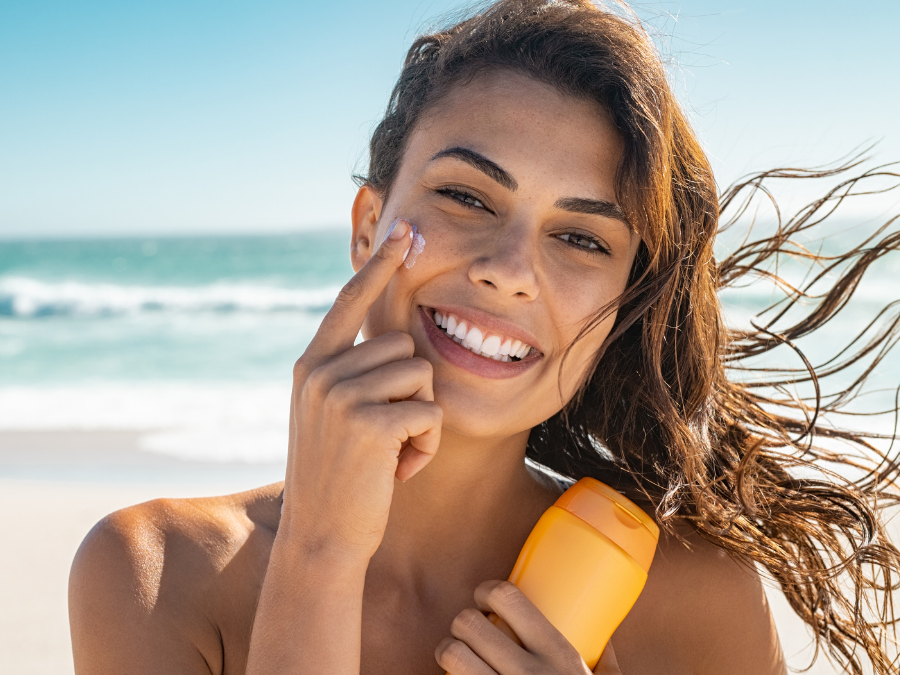
Sunscreen and Hair Extensions: The Summer Mistake That Can Permanently Stain Your Investment
If you've invested in hair extensions, you already know they deserve a little more care than your natural hair. But there's one summer culprit that catches even diligent guests off guard, and it's probably sitting in your beach bag right now: your sunscreen.
Knowing how to protect your hair extensions and your skin comes down to one surprising detail, the ingredients in the SPF you reach for every day.
The Ingredient That Stains Hair Extensions
The primary offender is a chemical called Avobenzone, which you'll also see listed on labels as Butyl Methoxydibenzoylmethane. It's one of the most common active ingredients in chemical sunscreens.
Here's the problem. When Avobenzone is exposed to heat, UV rays, or the minerals found in hard water and pool water, it can chemically react with the keratin and pigments in your extensions. The result is discoloration, your extensions turning peachy, pink, or orange.
And unlike a brassy tone in your natural hair that a toner can correct, this kind of staining is often permanent.
Other Chemical Sunscreen Ingredients to Avoid
Avobenzone isn't the only ingredient worth watching for. Two others can quietly shorten the life of your extensions:
- Octocrylene. This one can be highly drying to extension hair fibers, leaving them brittle and more prone to damage over time.
- Oxybenzone. This ingredient tends to leave an oily, sticky buildup on the hair and can further contribute to color fading.
Together, these three ingredients are the reason so many extension wearers notice their hair looking dull, discolored, or dry by the end of summer without ever connecting it to their daily SPF.
How to Protect Hair Extensions in Summer
The good news is that protecting your skin and protecting your extensions don't have to be at odds. A few small adjustments keep both safe.
Switch to a Mineral Sunscreen
Instead of chemical formulas, look for mineral sunscreens built on Zinc Oxide or Titanium Dioxide. These active ingredients work by sitting on top of the skin rather than soaking into porous hair fibers, so they protect you from UV exposure without causing discoloration in your extensions.
Mineral sunscreen and hair extensions are a far safer pairing, and you'll still get the broad-spectrum protection your skin needs all summer long.
Mind the Order You Apply It
How you apply your sunscreen matters just as much as which one you choose. Always apply SPF to your face, neck, and chest before you let your hair down, or while your hair is pulled up in a tight bun or ponytail.
Extension hair is more porous than your natural hair, which means it absorbs product more readily. Keeping your hair up and out of the way during application prevents the sunscreen from ever transferring onto the strands in the first place.
Small Habits, Lasting Results
Hair extensions are an investment, and summer doesn't have to undo them. By choosing a mineral sunscreen and being mindful of how and when you apply it, you can enjoy the sun while keeping your extensions looking exactly the way they did the day you left the chair.
A little extension care goes a long way, especially in the months when heat, UV, and pool water are all working against you at once.